Miami Miasma
The 305, according to two besties who grew up there.

The last and first time I had ever touched down in Miami, I had already thrown up twice. First, in the trash can outside of Olivia’s old apartment while our Uber driver looked on, perplexed. Then in the toilet on the Spirit Airlines flight, delaying our takeoff because precisely one guest was not buckled in.
It was mid-February of this year. Olivia and I had gone out the night prior with some of our besties, Isaac and Mariana, and ended up at the nightclub, Basement, in Maspeth, Queens. It wasn’t the dancing that did me in - I barely drank at the venue - but the lack of hydration during our pre-club drinks, which I’ve come to require alongside my alcohol intake. One of the many great things I inherited from my mother’s side of the family is a mutation in the aldehyde dehydrogenase 2 enzyme, which breaks down alcohol in one’s body. Not only do I turn strawberry red after half a White Claw, but reduced activity of this enzyme in my body means the toxic products of alcohol metabolism are prone to sudden buildup. If I don’t profusely hydrate in a 3:1 ratio of water to alcohol, I become violently sick without fail. This was one of those moments.
We’ve landed, somehow, but we’ve left my soul behind. Only my lifeless corpse made it to Florida, and my body is now Olivia’s burden to bear. She is soloing our travel logistics as my hungover spirit floats somewhere out in purgatory.
In and out of consciousness, my eyes flutter open in front of Bakery Pastelmania in Little Havana, a cornerstone of the city’s pasteles canon. Olivia has shepherded us here. A wave of nausea rocks me, and immediately I am throwing up in the street. She goes inside to order pastelitos de guayaba y queso and cortaditos, and to, primarily, get away from me. I cleaned up and limped inside, looking down bad and feeling even worse.
My vision was still spinning, my head was pounding, and my stomach had contorted into an unholy shape, however, upon one bite of a pastry, I became whole again. The flaky crunch gave way to a torrent of tart guava paste and sweet cheese and one sip of the saccharine, milky coffee snapped my vision back into focus. My body had regained its passenger. This, I thought to myself, is the pinnacle of pastry.
It was at this time I realized I’d left my wallet behind on the plane, but that is a saga for another time.
On this most recent trip to Miami with our besties, Clayton and Michael, just over a week ago, we went to bed at a reasonable hour the night before our flight. I was not hungover, and I was still hungry for pastelitos.
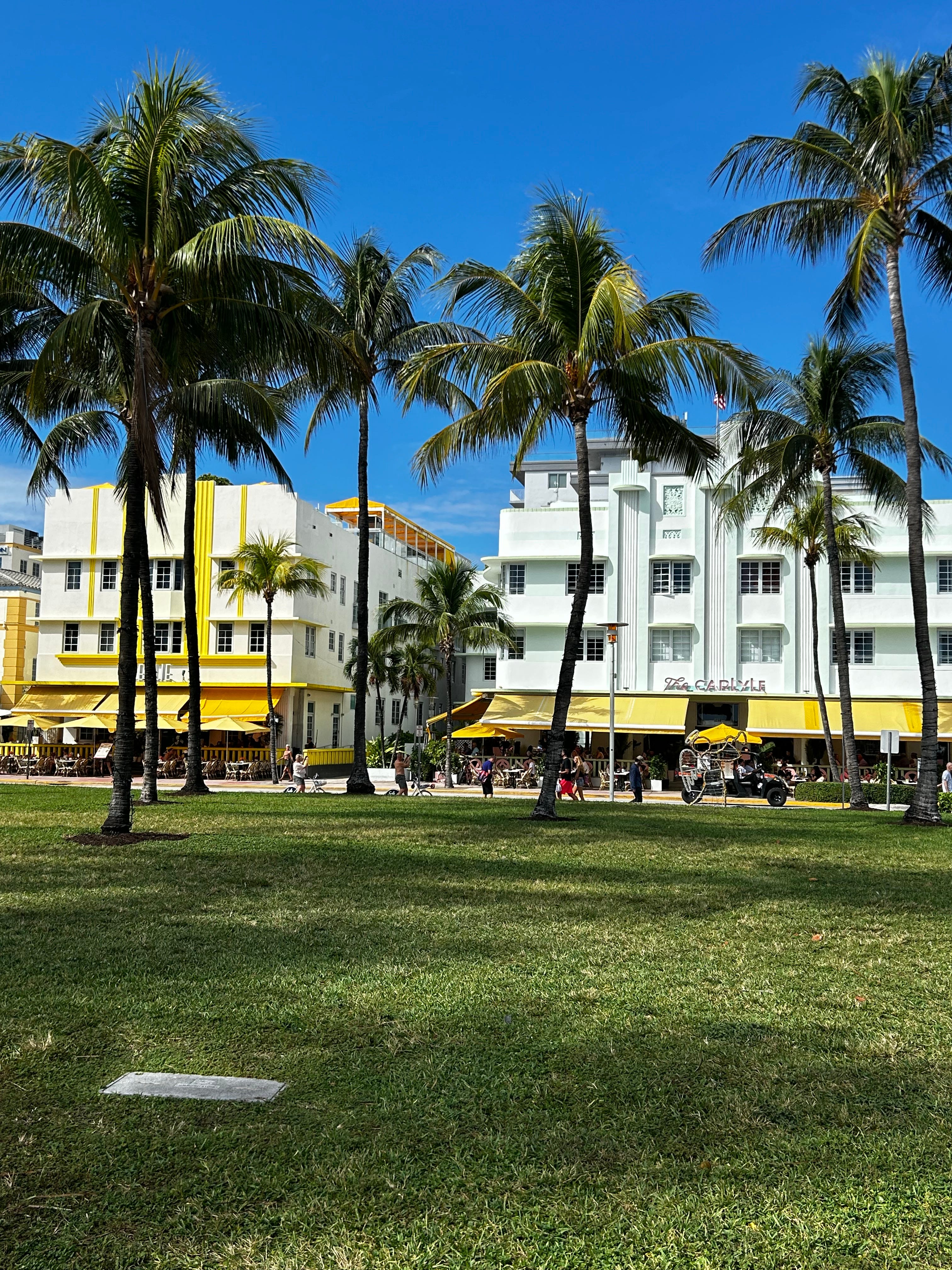
This four-day excursion saw us engaging with the second-most visited city in the U.S. through very much a tourist lens. We stayed in South Beach. We traversed the bridge over to Miami to consume - food, nightlife, shopping - like the ravenous little capitalists we purport ourselves not to be. We ate at zeitgeist-y restaurants, like Boia De, Joia Beach, and Mandolin. We did the club thing. We Ubered everywhere.
Now that I’ve disqualified my own point of view, I thought it best to, rather than recant tales of Miami myself, step back and give credence to some friends who grew up in and around Miami-Dade County. Meet Brian and, again, Mariana.
Our friend Brian was kind enough to meet up with us while we were kicking it in Miami Beach. Miami and Miami Beach are two distinct municipalities, with different governing bodies, people, subcultures, and lifestyles, so henceforth we shall be referring to the former as “the city” and the latter as “the beach.” Brian didn’t complain, even as we forced them to drive out to the beach for an (empty) emo night event at the bar, Kill Your Idol. “People really should attempt to visit areas outside of Miami Beach,” they told me. Brian scooped us from the beach and brought us out to the city for a new point of view. “As much as I love the beach, it gives a very different perspective of day-to-day life in the Miami area. Kendall and the Gables, Little Haiti, and Little Havana are full of people who have lived in Miami for years. Going further inland you’re able to get a stronger sense of community, be it food or environment.”
Brian is a first-generation Ecuadorian-Puerto Rican Miami native and spent their formative years growing up in Western Miami, home to primarily immigrants from Central America and Cuba. Their father immigrated to the US from Ecuador and their mother was originally born in Miami but raised in Puerto Rico, returning to the US when she was a teenager. Miami is known to many as the “Gateway to Latin America” or even the “Capital of Latin America”; as of 2015, nearly 75% of residents spoke a language other than English at home, predominantly Spanish and Spanish Creole.
In successive waves throughout the mid-century, due in large part to the United States’ habit of backing coup d'états to further American corporate interests and destabilize the region, immigrants and refugees made their way to Miami from the Caribbean and Latin America. By the 1970s, Miami had a Hispanic majority and was developing into a major international, financial, and cultural terminus. Time Magazine once referred to Miami as “a sort of Hong Kong of the Americas,” in reference to its status as a city remade into a “hemispheric crossroads for trade, travel, and communications in the 21st century,” driven primarily by its bilingual immigrants.
“Yes, I would say that Miami is a gateway to Latin America,” said Brian. “People from the Caribbean and Latin America have moved here and lived here for generations.”
“People joke that Miami is Northern Cuba, and they’re not wrong,” added Mariana. “It was only when I moved to New York, did it start to feel like I was living in the United States… and that’s New York! You can speak to almost anyone in Miami in Spanish and they will understand you. It’s such a comfort for so many people immigrating from Latin America because there is no language barrier. I’m Mexican and Nicaraguan, and I grew up with friends from Venezuela, Bolivia, Cuba, Argentina, etc. and through time we taught each other the different cultural things we did growing up. I never felt isolated or ‘othered’ and that’s not an experience everyone gets immigrating to the States,” she confided. “I am so damn lucky to have grown up in Miami.”
As with many major US cities, the rift between the haves and have-nots has fractured ever wider in conjunction with the pandemic, and the explosive growth of cities post-pandemic. “I will say Miami is not exactly the melting pot [it once was]. There is a certain disconnect where you no longer see a lot of overlap of cultures,” said Brian. Historically immigrant-led communities like Little Haiti are grappling with a handful of existential threats; a $1 billion real estate development plan among them, slated to bring luxury high-rise apartments, luxury shops, and office towers to the neighborhood’s low-lying streets lined with small homes and colorful shops that service a predominantly Afro-Caribbean population. Wealthy Miami homebuyers are escaping the coasts – which face the existential threat of climate change – in search of higher-elevation areas to develop, a force otherwise known as climate gentrification.
State governance hasn’t helped the culture. Aggressive conservative shifts in healthcare and education have decimated everything from abortion access to school vouchers for underprivileged children. LGBTQIA+ rights have been crudely dissected and many members of the community are leaving Florida because they don’t feel welcome anymore — a decision cheered by the governor’s staff. State control over education in the state has infamously banned discussions on race relations and gender identity in classrooms. Disney is now an enemy of the state.
“Miami has significantly changed politically (due to the world’s most incompetent and ridiculous governor),” said Mariana of a certain transphobe who wears height boosters in his shoes, “But before him, when I was a child in Miami, I grew up in the best city. Miami has some incredible public magnet schools that really allow children to explore what sort of future they want to have. If you wanted to be a fashion designer or architect, you could go to DASH. If you want to be a veterinarian, go to Felix Varela. Fine arts or theatre? New World or Coral Reef. And these schools are littered all throughout Miami so it was accessible and FREE for every kid. Then beyond that, Miami is so ecologically diverse! I had the Everglades just 30 minutes away! People would kayak after school as a part of the environmental cleanup. Not to mention that I could go to the beach whenever I wanted to.”
Despite the vacillations of the city, it always seemed to me that Miami was a place that celebrated the cuisine(s) and culture(s) of its immigrant populace. I wanted to know what our friends grew up eating, drinking, and doing in Miami so that we all might be more informed visitors.
According to Brian, one should try: “A Frita. It’s like a Cuban pork burger topped with shoestring fries, ketchup/sauce, and usually grilled onions. Great for a hangover.” To drink: “Miami has some of my favorite breweries I’ve been to. So any solid local beer here, honestly.”
To do: “Miami has a small but growing alternative nightlife scene that is very different from what is pictured in movies there is a deeper level of respect and collaboration.” For more official and corporate functions, check RA Guide or DICE for events happening while you’re in Miami. For anything off the beaten path, I’ll connect you with Brian 😉
Per Mariana: “If you want to do Cuban food right, go to El Palacio de los Jugos on West Flagler, and don’t skip out on their fresh juices like papaya and mamey.” As for drinks, “a mojito is always a go-to, but if you want a place to drink and listen to music, I recommend Lagniappe in Midtown!” (The author seconds this idea).
And, of course, the doing: “Definitely explore Wynwood! Besides its incredible street art, there’s so much to do. Grab a coffee at Panther Coffee, go to the food hall at 1-800 Lucky, or hit up Zak the Baker for bread and pastries. If you find yourself there Saturday or Sunday morning, I highly recommend going to R House for Drag Brunch!
If you have more time and want to get away from Miami Beach, Coconut Grove and Coral Gables are some of my favorite neighborhoods. Grab A.C.’s Icees at Kennedy Park and spend the evening at Los Felix for natural wines, and great Mexican food while they spin vinyl. If you visit the Grove, there are tons of wild peacocks just roaming the street. It’s the best.”


And, finally, some scatterbrained thoughts and scribblings from my travel journal:
Actually witnessed the heretical scooped bagel order in the wild, and we haven’t even left JFK yet…
Two sips in and the cortadito is rattling my skull.
Wearing the least pool-friendly footwear imaginable to the pool is c*nt.
Sneaking agave into skinny margaritas must certainly be a favor to the customer.
Contrary to what Anakin would lead you to believe, sand is okay IF your accommodations allow you to fully shower off within 15 minutes of leaving the beach.
However, they will decide to film a commercial in front of your hotel entrance that prevents you from entering, replete with a crew of 30+ people, and models pretending to lick quickly-melting ice cream cones.
Getting stared at by a middle-aged man who looks like Benny Safdie (plus 20 years) while waiting in line for the bathroom begets him a cutting stare right back. Deep eye contact, Uno reverse, bitch!
Guava and cheese, please!
Miami is a veritable zoo of quality bars and considered restaurants, but at least one stop on your trip will involve sparklers and overpriced bubbles in some capacity. They may not be floating toward your table, but they will be there.
“Or Michael Kidd, Michael Kidd, Michael Kidd, Michael Kidd! Or Madonna, Madonna, Madonna!… but you keep it all inside.”